
Personal training and clinical exercise, whilst falling under the same umbrella of movement, encompass very different specialisms. Each has a distinct purpose, requiring different skill sets and levels of responsibility.
At Exercise Right, we believe specialists should be proud to be specialists, and for that reason, be proud to “stay in their specialist lane”.
Does this mean they can’t collaborate or communicate with other specialists? No.
However, it does mean that specialists should have a firm understanding of where their expertise begins and ends and when a client’s needs sit between disciplines.
In this post, we want to talk about these two roles, their differences, and why collaboration matters.
Understanding the Difference Between Personal Training and Clinical Exercise
While both roles involve movement, the focus and depth of knowledge required are very different. Treating both as the same undermines each respective specialisation and its outcomes.
Clinical Exercise focuses on safety, risk management, and a deep understanding of exercise contraindications. Clinical exercise specialists can discern trends that should be referred to a medical professional or escalated more urgently. Their role is essential to ensure a safe, structured environment around an individual’s clinical profile.
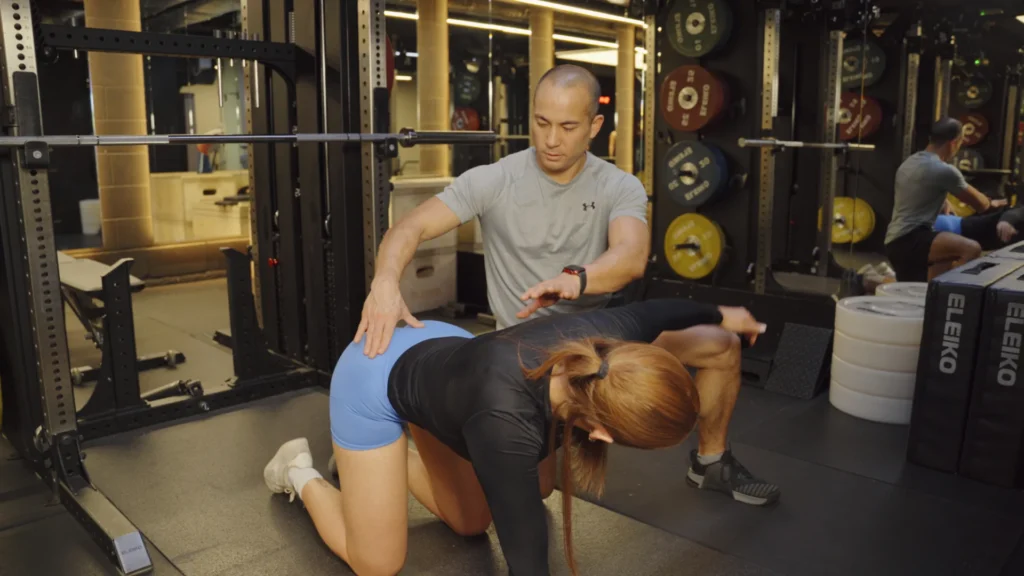
Personal Training focuses on building physical strength and capacity. This includes improving movement quality, performance & strength, and ultimately helping clients progress their fitness goals. Their expertise lies in programming and coaching, forming a solid foundation that enables clients to apply effort productively once exercise has been deemed safe.
The clear distinction in expertise and outcomes highlights how and why these specialisations can, and should, work together when needed. It also shows they aren’t interchangeable.
Why Staying in Your Specialist Lane Protects Clients
A core principle of ours is that no single practitioner should feel the need, or requirement, to do everything.
Staying within a clearly defined scope of practice is a safeguard, not a limitation. Clients benefit from stronger, clearer decision-making, better risk management, and a deeper, appropriate level of progression when specialists stay within their lane.
Attempting to blur these responsibilities creates unnecessary risk.
When appropriately combined, a clinical exercise specialist has the knowledge to determine when an exercise should be modified, paused, or escalated, while a personal trainer can then build physical capacity once the green light has been given.
When blurred, clients may be given clearance on paper without practical support or pushed towards performance goals without sufficient clinical oversight.
Where Collaboration Between Personal Training and Clinical Exercise Becomes Essential
Throughout our combined years working with clients, we rarely see individuals fit into just one category. Health profiles and medication requirements often place them somewhere between general fitness and clinical care. Lifestyle factors also play a critical role in better understanding what is needed for each client.
Taking an integrated approach allows both disciplines to contribute at the appropriate time, rather than viewing client care as a linear process. This provides deeper support and helps individuals navigate their journey, connecting them with the right specialist at the right time.
A Real-World Example: Managing High Blood Pressure Safely
High blood pressure provides a clear, common example of why clinical exercise and personal training must work together.
In a typical gym setting, someone with high blood pressure would need a GP letter clearing them to exercise. Unfortunately, that member is usually left to their own devices in the gym, where overexertion could cause a medical emergency.
Which then begs the question: Is the client actually safe to train?
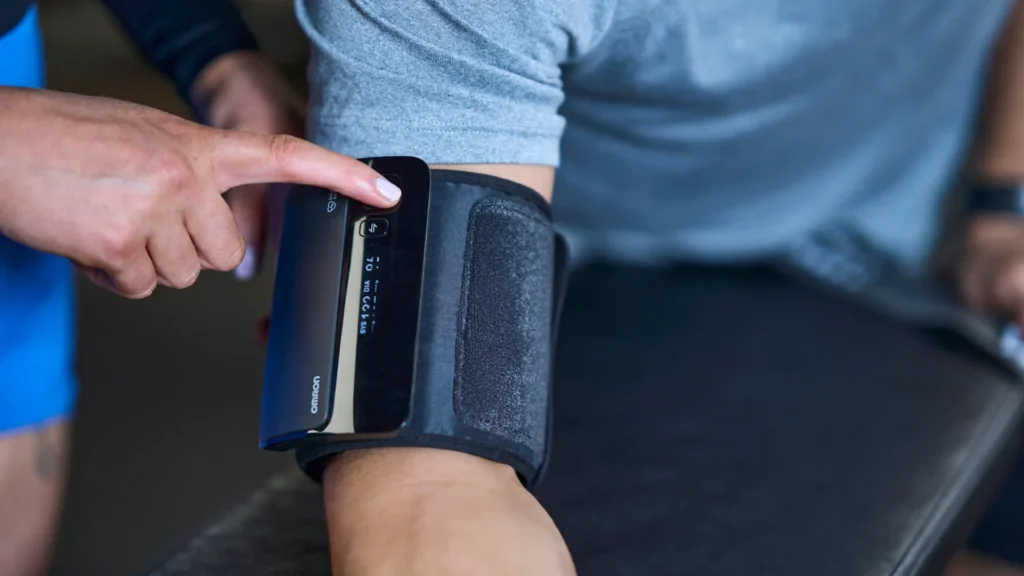
While a GP letter serves as a blanket “okay”, there are other important considerations beyond this clearance. A blood pressure reading above 140/90, for example, indicates that exercise should not proceed. But, as a specialist, a few key questions arise:
- Did you know that you can modify a warm-up to decrease blood pressure, making exercise possible?
- Do you know how to manage heart rate readings and levels if someone is on a beta-blocker?
If the answer is no, that’s okay. If you’re not a clinical exercise specialist, why would you need to know that?
These are not minor details, though.
If a personal trainer is working with a client who has ticked the “high blood pressure” box on their pre-exercise questionnaire (PARq), there is a clear concern that underscores the need for clinical exercise specialists and personal trainers to work together.
When the Role Transitions Back to Personal Training
The need for collaboration works in both directions.
Clinical exercise is not intended to be a permanent holding space once risk has been managed. A great example of this is a client who has completed several months of structured exercise. As a result, they have successfully stopped beta blocker medication, have consistently normal blood pressure results, and have no other clinical concerns.
That client now wants to train for a 10km run.
At this stage, a personal trainer is best suited to aid this new journey. They can help the client build strength, improve running economy, and enhance overall endurance. These are areas that the clinical exercise specialist likely does not have in-depth knowledge of.
Why This Integrated Approach Benefits Clients Long-Term
Frictionless collaboration is exactly what we demand at Exercise Right UK.
Clients are often left navigating decisions on their own when specialists work in isolation. To avoid this, we strive for an always-integrated approach that removes this burden and provides clear direction.
Reduced injury risk and greater confidence in progression are also benefits of integrated approaches. Instead of just showing up and acting, clients understand why certain phases focus on safety and control, while others prioritise performance and challenge.
This supports long-term consistency and ensures clients are more likely to train safely, recover well, and remain engaged over time.
Choosing the Right Support at the Right Time
Personal training and clinical exercise are not competing services. They are complementary disciplines that, when aligned correctly, provide a safer and more effective pathway through movement.
This level of collaboration isn’t an afterthought for us.
We work as a team, are proud to be specialists, and are always looking at the best, most natural path for our clients. Our ecosystem of specialists is trusted by our team and enables our clients to capitalise on an expansive network of top specialists.
If you’re looking for help understanding your journey and whether a personal trainer or exercise specialist is right for you, get in touch with our team.
Or, if you’re a specialist yourself and are interested in joining our team, contact us via our Join our team page.